
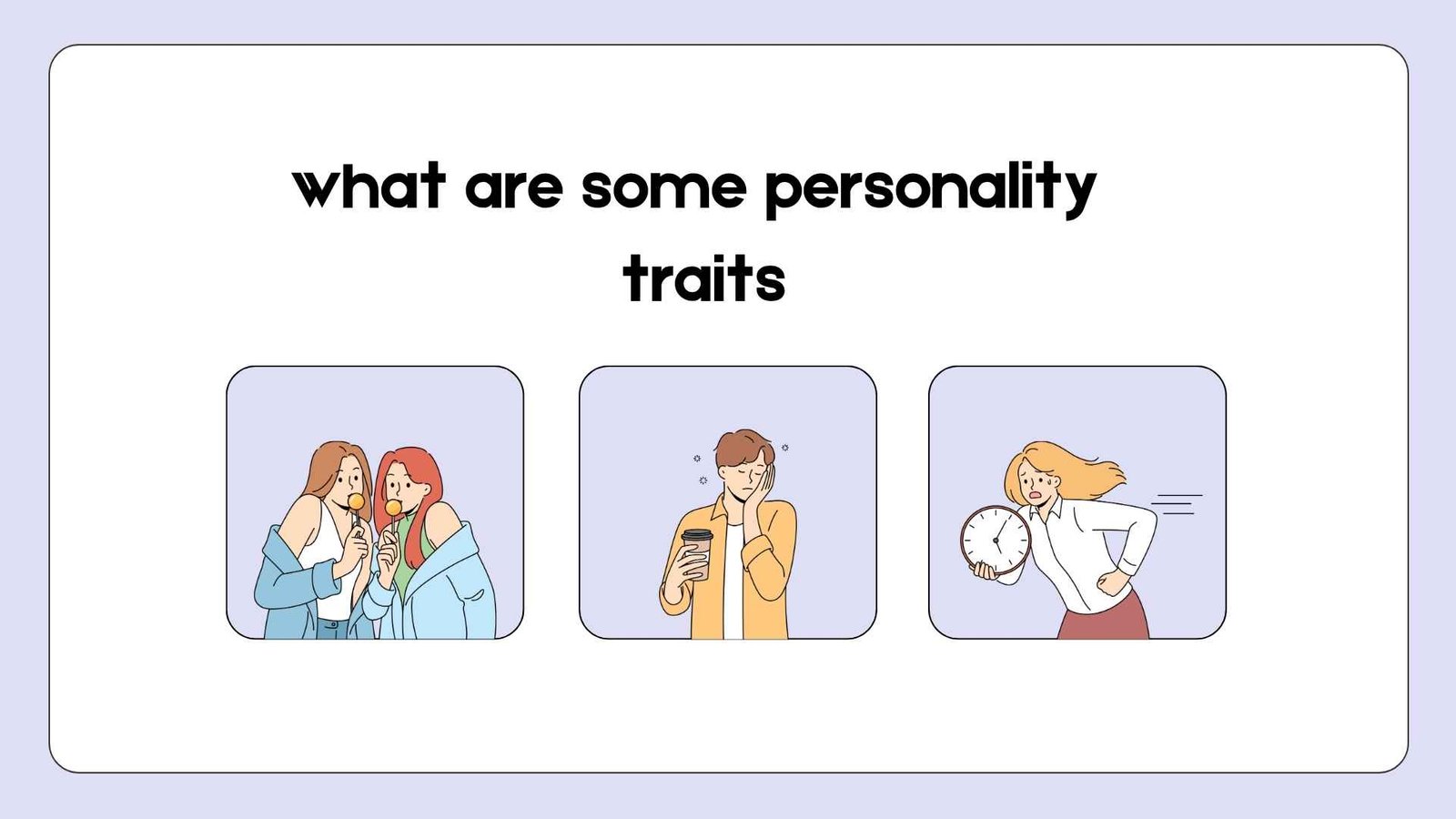
What are some personality traits? Personality traits are the consistent patterns of thoughts, feelings, and behaviors that influence how people respond to situations, interact with others, and make decisions. Common personality traits include kindness, honesty, confidence, creativity, patience, curiosity, responsibility, and resilience.
Some traits are considered positive strengths, while others may create challenges depending on the situation.
Understanding personality traits helps you recognize yourself, improve relationships, choose better communication styles, and understand why people behave differently. This complete guide explains different types of personality traits, their meanings, examples, psychological perspectives, and how they appear in everyday life.
What Are Some Personality Traits? (Quick Answer)
Personality traits are the qualities and characteristics that describe how a person typically thinks, feels, and behaves. Examples of personality traits include:
- Positive traits: kindness, honesty, empathy, confidence, creativity, patience, and reliability.
- Negative traits: selfishness, arrogance, impatience, dishonesty, and stubbornness.
- Neutral traits: introversion, curiosity, independence, seriousness, and competitiveness.
Personality traits develop through a combination of genetics, life experiences, environment, culture, and personal choices.
What Are Personality Traits?
Personality traits are stable characteristics that describe a person’s typical patterns of behavior, emotions, and thinking. They help explain why one person may enjoy social situations while another prefers solitude, or why one individual stays calm under pressure while another becomes anxious.
Traits are not single actions. Instead, they represent repeated tendencies.
For example:
- A person who regularly helps others may be described as compassionate.
- Someone who consistently completes tasks on time may be described as responsible.
- Someone who searches for new ideas may be described as creative.
Personality traits influence:
- Communication style
- Decision-making
- Relationships
- Work habits
- Leadership style
- Emotional responses
- Problem-solving approaches
Trait Overview Table

| Personality Trait | Meaning | Example Behavior |
| Kindness | Caring about others’ feelings | Helping someone in need |
| Honesty | Being truthful and sincere | Admitting mistakes |
| Confidence | Believing in your abilities | Sharing ideas openly |
| Creativity | Producing new ideas | Finding unique solutions |
| Patience | Remaining calm while waiting | Handling delays peacefully |
| Curiosity | Desire to learn and explore | Asking thoughtful questions |
| Responsibility | Being dependable | Completing commitments |
| Empathy | Understanding others’ emotions | Listening with compassion |
| Resilience | Recovering from difficulties | Trying again after failure |
| Humility | Having a modest view of yourself | Accepting feedback |
The Main Types of Personality Traits
Personality traits can be grouped in several ways depending on the purpose of studying them. Psychologists often examine traits through models such as the Big Five personality traits, while everyday language commonly divides traits into positive, negative, and neutral categories.
Positive Personality Traits That Build Strong Character
Positive personality traits are qualities that usually help people create healthy relationships, achieve goals, and handle challenges effectively.
Kindness
Kindness involves showing care, respect, and consideration toward others. Kind people often notice when someone needs support and is willing to help.
Examples:
- Supporting a struggling friend
- Treating workers respectfully
- Offering help without expecting something in return
Kindness improves social connections because people naturally trust individuals who show genuine concern.
Honesty
Honesty means being truthful in words and actions. Honest people communicate openly and accept responsibility for their choices.
Examples:
- Telling the truth even when it is difficult
- Giving accurate information
- Admitting mistakes
Honesty is important in friendships, families, and professional environments because it creates trust.
Confidence
Confidence is the belief that you can handle challenges and contribute value.
A confident person does not necessarily believe they are perfect. Instead, they understand their abilities and are willing to improve.
Examples:
- Speaking during meetings
- Trying new activities
- Sharing opinions respectfully
Creativity
Creativity is the ability to develop new ideas, solutions, or perspectives.
Creative people often:
- Think differently
- Experiment with possibilities
- Solve problems in unique ways
Creativity is valuable in fields such as art, science, business, technology, and education.
Patience
Patience allows people to remain calm when facing delays, difficulties, or frustration.
A patient person may:
- Listen carefully before responding
- Wait for long-term results
- Handle stressful situations calmly
Patience supports emotional control and better decision-making.
Negative Personality Traits That Can Create Challenges
Negative personality traits are characteristics that may harm relationships, personal growth, or decision-making when they become excessive.
A trait itself may not always be completely negative. For example, confidence can become arrogance when someone ignores others’ opinions.
Arrogance
Arrogance involves having an exaggerated sense of one’s importance or abilities.
Common signs include:
- Refusing feedback
- Looking down on others
- Believing you are always right
Impatience
Impatience occurs when someone struggles to tolerate delays or slow progress.
Examples:
- Becoming frustrated quickly
- Interrupting others
- Expecting immediate results
Stubbornness
Stubbornness means strongly holding onto opinions or decisions despite evidence or advice.
A small amount of determination can be useful, but extreme stubbornness can prevent growth.
Selfishness
Selfishness involves focusing mainly on personal needs while ignoring others.
Examples:
- Taking credit for others’ work
- Ignoring other people’s feelings
- Refusing to compromise
Dishonesty
Dishonesty includes misleading others or hiding the truth.
It can damage:
- Trust
- Relationships
- Professional reputation
Neutral Personality Traits That Depend on Context
Some traits are neither completely good nor bad. Their value depends on how and where they are expressed.
Introversion
Introversion describes people who often regain energy through quiet reflection or time alone.
Introverted individuals may:
- Prefer smaller groups
- Think carefully before speaking
- Enjoy independent activities
Introversion is not the same as shyness.
Independence
Independent people prefer making decisions and solving problems on their own.
Advantages:
- Self-confidence
- Personal responsibility
- Initiative
Challenges:
- Difficulty asking for help
- Avoiding teamwork
Competitiveness
Competitive people enjoy challenges and strive to achieve goals.
Healthy competitiveness can encourage improvement, while excessive competitiveness may create conflict.
Seriousness
Serious individuals often focus deeply on responsibilities and goals.
This can be useful in professional settings but may need balance with flexibility and humor.
The Big Five Personality Traits Explained
Psychologists often study personality using the Big Five model, also called the Five-Factor Model.
The five broad personality dimensions are:
| Big Five Trait | Meaning | Common Characteristics |
| Openness | Interest in new experiences | Creative, imaginative, curious |
| Conscientiousness | Organization and responsibility | Reliable, disciplined, careful |
| Extraversion | Social energy and interaction | Outgoing, energetic, expressive |
| Agreeableness | Cooperation and compassion | Kind, helpful, trusting |
| Neuroticism | Emotional sensitivity | More likely to experience stress or worry |
The Big Five model does not label people as “good” or “bad.” It describes personality differences that exist across individuals.
Personality Traits vs Character Traits
| Personality Traits | Character Traits |
| Describe patterns of thinking, feeling, and behaving | Describe moral values and ethical qualities |
| Often studied in psychology | Often connected with principles and choices |
| Can include introversion or creativity | Can include honesty or courage |
| Influenced by biology and environment | Strongly shaped by values and experiences |
For example:
A person may naturally be introverted (personality trait) but also highly honest (character trait).
Internal Traits vs External Traits
| Internal Traits | External Traits |
| Related to thoughts and emotions | Visible behaviors and actions |
| Confidence | Speaking style |
| Curiosity | Asking questions |
| Patience | Calm reactions |
| Empathy | Helping behavior |
Internal traits often influence external actions.
How Personality Traits Develop
Personality develops through a combination of multiple influences.
Genetics and Biology
Research in personality psychology suggests that inherited factors contribute to personality differences. However, genes do not completely determine personality.
A person may inherit tendencies toward certain behaviors, but experiences and choices continue shaping personality.
Environment and Upbringing
Family, education, culture, and social experiences influence personality development.
Examples:
- Encouragement may increase confidence.
- Positive role models may encourage kindness.
- Challenging experiences may build resilience.
Life Experiences
Major experiences can influence traits over time.
Examples:
- Overcoming challenges can strengthen determination.
- Learning new skills can increase confidence.
- Working with diverse people can improve empathy.
Why Personality Traits Matter in Real Life
Understanding traits can improve many areas of life.
Relationships
Knowing personality differences helps people communicate better.
Example:
A highly emotional person may need reassurance, while a highly independent person may prefer space.
Education
Teachers can use knowledge of personality differences to support different learning styles.
Example:
A curious student may enjoy exploration-based projects.
Workplace Success
Employers often value traits such as:
- Reliability
- Communication skills
- Adaptability
- Teamwork
- Leadership
Personal Growth
Recognizing your own traits helps you:
- Identify strengths
- Improve weaknesses
- Set realistic goals
- Build better habits
20 Real-Life Examples of Personality Traits
- A nurse who comforts nervous patients shows compassion.
- A student who studies regularly demonstrates discipline.
- A manager who accepts criticism shows humility.
- An entrepreneur who tries new ideas displays innovation.
- A friend who listens carefully demonstrates empathy.
- An athlete who continues after losing shows resilience.
- A teacher who explains lessons patiently shows understanding.
- A leader who makes fair decisions shows integrity.
- A writer who creates original stories shows imagination.
- A worker who finishes tasks without reminders shows responsibility.
- A volunteer helping strangers shows generosity.
- A researcher exploring new questions shows curiosity.
- A person who remains calm during conflict shows self-control.
- A teammate who supports others shows cooperation.
- A speaker sharing ideas confidently shows assertiveness.
- A person adapting to change shows flexibility.
- A person keeping promises shows reliability.
- A person respecting different opinions shows tolerance.
- A person planning carefully shows organization.
- A person learning from mistakes shows a growth mindset.
Common Misconceptions About Personality Traits
Myth: Personality Never Changes
Fact: Personality traits are relatively stable, but people can develop and strengthen certain qualities through experiences, habits, and self-awareness.
Myth: Every Trait Is Either Good or Bad
Fact: Many traits depend on context.
For example:
- Confidence can become arrogance.
- Caution can become fear.
- Independence can become isolation.
Myth: Personality Traits Completely Control Behavior
Fact: Situations matter. A usually calm person may react differently during extreme stress.
Myth: Introverts Are Not Social
Fact: Introverted people can enjoy relationships and communication. They may simply prefer different social environments.
How to Identify Your Own Personality Traits
You can better understand your traits by:
- Observing repeated behaviors.
- Asking trusted people for feedback.
- Reflecting on your reactions.
- Identifying strengths and weaknesses.
- Using established personality assessments carefully.
Useful reflection questions:
- How do I respond under pressure?
- What qualities do others appreciate about me?
- What behaviors create problems for me?
- What traits do I want to improve?
Frequently Asked Questions
What are the most common personality traits?
Common personality traits include kindness, honesty, confidence, creativity, patience, curiosity, responsibility, empathy, independence, and resilience.
What are the five major personality traits?
The five major personality traits in the Big Five model are openness, conscientiousness, extraversion, agreeableness, and neuroticism.
Can personality traits change over time?
Yes. Although personality traits tend to remain relatively consistent, people can develop new habits, improve emotional skills, and strengthen certain qualities.
What are examples of good personality traits?
Examples of positive personality traits include honesty, kindness, reliability, courage, patience, empathy, creativity, and responsibility.
What are examples of bad personality traits?
Examples of harmful traits include dishonesty, arrogance, selfishness, impatience, and excessive stubbornness.
Are personality traits inherited?
Some personality differences have biological influences, but environment, culture, experiences, and personal choices also play important roles.
Key Takeaways
- Personality traits describe consistent patterns in thoughts, emotions, and behaviors.
- Traits can be positive, negative, or neutral depending on context.
- The Big Five model is one of the most recognized approaches to understanding personality.
- Personality develops through genetics, environment, and life experiences.
- Understanding traits improves relationships, communication, and personal growth.
- People can strengthen many positive traits through awareness and practice.
Conclusion
Understanding what are some personality traits helps explain why people think, feel, and behave differently. Traits such as kindness, honesty, confidence, creativity, patience, and resilience shape how individuals interact with the world. While some traits may create challenges, every characteristic exists within a larger context.
Personality is not a fixed label. It is a combination of natural tendencies, experiences, values, and choices. By recognizing your own personality traits and understanding others, you can improve relationships, make better decisions, and continue growing as a person.

I’m Edmund Fairchild, a British writer devoted to exploring the qualities that distinguish one personality from another. I examine character traits through psychological, social, and behavioural perspectives, presenting ideas in an engaging and accessible manner. My purpose is to encourage deeper reflection on personality, individuality, temperament, and human behaviour.
Books:
- The Dimensions of Human Character
- An Introduction to Personality Traits
 Alistair Pembroke
 Sebastian Langford