
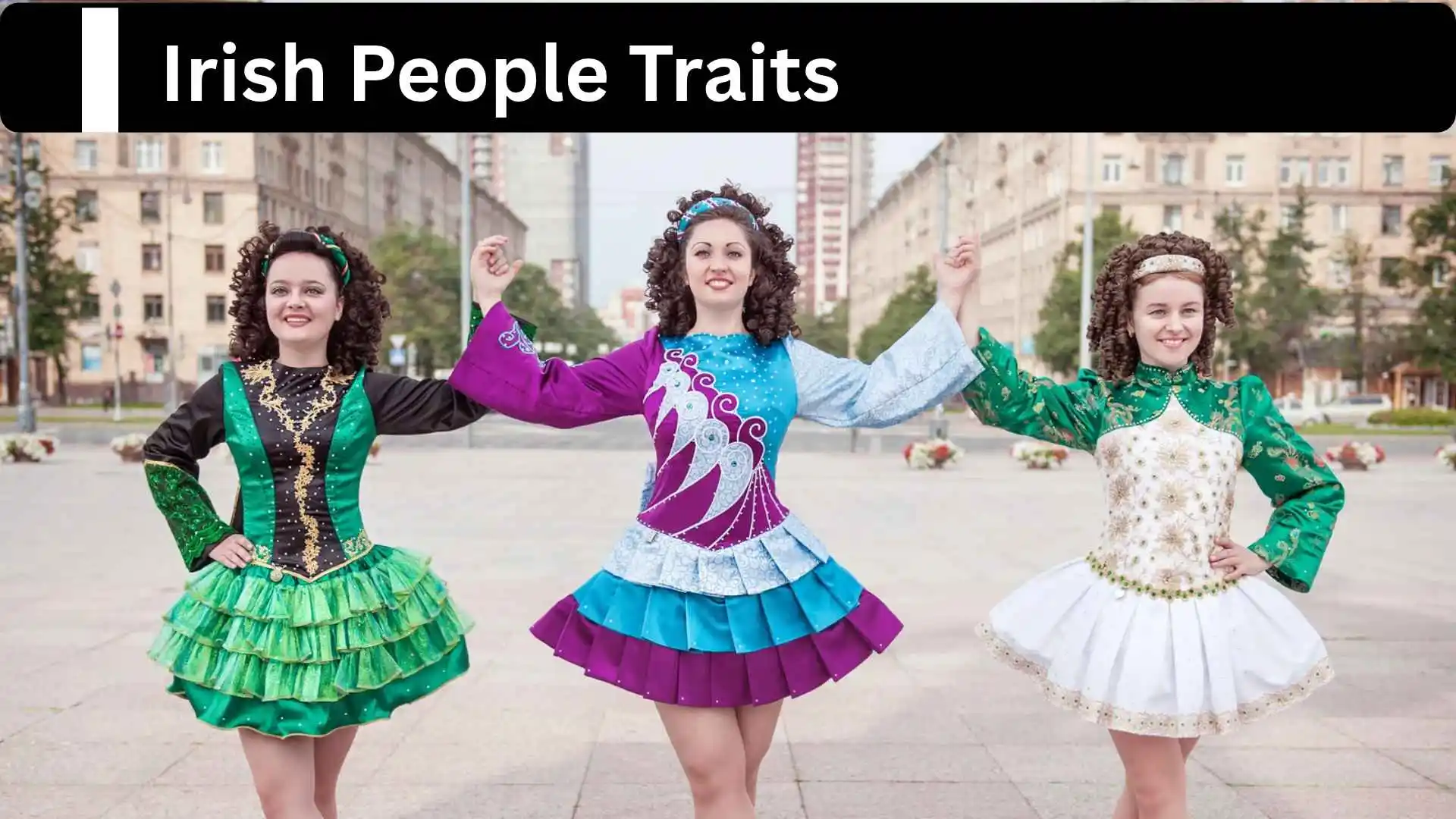
Irish people traits are often associated with warmth, humor, storytelling, resilience, hospitality, and a strong sense of community. However, Irish identity is diverse and shaped by centuries of history, family traditions, geography, language, migration, and cultural experiences.
While no personality trait applies to every individual from Ireland, many commonly recognized characteristics reflect cultural values that have developed over generations.
This guide explores the most common Irish people traits, including positive qualities, challenges, communication styles, social behaviors, historical influences, and everyday examples.
Understanding these traits helps explain how Irish culture influences relationships, workplaces, friendships, and family life.
Irish People Traits:(Quick Answer)
Irish people traits commonly include friendliness, humor, loyalty, resilience, creativity, storytelling ability, hospitality, humility, independence, and a strong connection to family and community. These characteristics are influenced by Irish history, traditions, social values, and cultural identity rather than genetics or fixed personality patterns.
Overview of Irish People Traits
| Trait | Description | How It Often Appears |
| Hospitality | Welcoming and generous attitude toward others | Inviting guests in, offering food or conversation |
| Humor | Ability to find amusement even during difficult times | Jokes, witty conversations, playful teasing |
| Storytelling | Strong tradition of sharing experiences through stories | Family tales, folklore, personal memories |
| Loyalty | Deep commitment to relationships | Supporting friends and family |
| Resilience | Ability to adapt during challenges | Overcoming hardships with determination |
| Community Spirit | Importance placed on belonging | Local events, neighborhood connections |
| Humility | Preference for modesty over showing off | Downplaying achievements |
| Creativity | Strong artistic and imaginative expression | Music, literature, art, and problem-solving |
| Independence | Value placed on personal freedom | Making individual choices |
| Emotional Warmth | Open and caring social interactions | Friendly conversations and empathy |
What Are Irish People Traits?
Irish people traits refer to commonly observed cultural and social characteristics connected with people from Ireland and Irish communities worldwide. These traits develop from shared experiences, traditions, history, and social values.
It is important to understand that Ireland has a diverse population. People from different regions, generations, backgrounds, and personal experiences may express these characteristics differently.
Culture Shapes Personality
Culture influences how people communicate, build relationships, solve problems, and express emotions. Irish culture has historically emphasized:
- Family connections
- Social relationships
- Humor during hardship
- Respect for traditions
- Community involvement
- Oral storytelling
These cultural influences help explain why certain Irish characteristics are widely recognized.
Positive Irish People Traits
Irish culture is often admired for several positive qualities that appear in social, personal, and professional settings.
1. Strong Sense of Humor
One of the most recognized Irish characteristics is humor. Irish humor often involves clever wordplay, storytelling, self-deprecation, and finding light moments during challenging situations.
Rather than avoiding difficulties, humor can become a way to cope with them and strengthen relationships.
Examples:
- Making jokes during stressful situations
- Using playful teasing among close friends
- Sharing funny stories at gatherings
Irish comedy, literature, and conversation traditions often reflect this appreciation for wit.
2. Natural Hospitality
Hospitality is one of the most frequently associated Irish cultural values. Welcoming visitors, offering conversation, and making people feel comfortable are important social behaviors.
A visitor may experience this through:
- Friendly conversations with strangers
- Invitations to family gatherings
- Sharing meals and drinks
- Genuine interest in others
Hospitality is not only about being polite; it represents the importance of human connection.
3. Loyalty and Commitment
Many Irish families and communities place high value on loyalty. Strong relationships are often built through trust, shared experiences, and long-term connections.
This trait may appear through:
- Supporting friends during difficult periods
- Maintaining lifelong friendships
- Staying connected with family traditions
Loyalty is especially important in close-knit communities.
4. Resilience and Strength
Irish history includes periods of economic difficulty, migration, political struggles, and social change. These experiences contributed to cultural narratives emphasizing endurance and adaptability.
Resilience may appear as:
- Staying positive during challenges
- Adjusting to new situations
- Recovering after setbacks
Many Irish communities around the world carry this reputation for perseverance.
5. Storytelling Ability
Storytelling has deep roots in Irish culture. Traditional Irish communities preserved history, family memories, myths, and local knowledge through spoken stories.
Strong storytelling skills often include:
- Creating emotional connections
- Remembering details
- Entertaining listeners
- Sharing lessons through experiences
This tradition can be seen in Irish literature, music, theater, and everyday conversations.
Social and Communication Traits of Irish People
Irish communication styles are often shaped by friendliness, humor, and indirect expressions.
Friendly Conversation Style
Many Irish social interactions begin with casual conversation. Talking about daily life, weather, sports, family, or local events can help build relationships.
A simple conversation may become a meaningful connection because social interaction is highly valued.
Use of Humor in Communication
Humor often plays a role in:
- Building friendships
- Reducing tension
- Showing affection
- Creating a relaxed atmosphere
A person may use jokes not because they are avoiding seriousness, but because humor is a common social tool.
Indirect Communication
Irish communication can sometimes be more subtle than direct. People may use politeness, humor, or softer language instead of openly expressing disagreement.
For example:
Direct statement:
- “I disagree with this idea.”
More indirect style:
- “I’m not sure that’s the best way to look at it.”
Understanding context is important when interpreting communication styles.
Irish People Traits in Family and Relationships
Family relationships have traditionally played an important role in Irish culture.
Strong Family Bonds
Many Irish families value:
- Regular communication
- Shared celebrations
- Respect for older generations
- Maintaining family traditions
Family gatherings often provide opportunities for storytelling, humor, and emotional connection.
Deep Friendships
Friendships in Irish culture are often built gradually but can become very strong.
Common friendship values include:
- Trust
- Reliability
- Shared memories
- Mutual support
Close friendships may feel similar to extended family relationships.
Irish People Traits in the Workplace
Cultural traits can influence professional behavior, although individuals vary greatly.
Team-Oriented Approach
Many Irish professionals value cooperation and positive workplace relationships.
This may involve:
- Helping colleagues
- Building friendly connections
- Creating supportive environments
Creativity and Problem-Solving
Ireland has produced many influential writers, artists, scientists, entrepreneurs, and innovators. Creativity is often encouraged through education, storytelling traditions, and cultural expression.
Creative traits may appear in:
- New ideas
- Flexible thinking
- Innovative solutions
Humility at Work
Some Irish professionals prefer modesty rather than openly highlighting achievements.
This may create a communication style where people:
- Let results speak for themselves
- Avoid excessive self-promotion
- Value teamwork
Historical Influences Behind Irish Characteristics
The Role of Irish History
Irish culture has been shaped by a complex history involving migration, political change, language preservation, and social transformation.
Important influences include:
- Gaelic traditions
- Irish literature
- Music and dance
- Community relationships
- Global Irish diaspora
Historical experiences helped develop cultural values connected with resilience and identity.
The Irish Diaspora and Global Identity
Millions of people worldwide have Irish ancestry, creating strong cultural communities outside Ireland.
Irish communities abroad often maintain:
- Traditional celebrations
- Family stories
- Cultural organizations
- Music and dance traditions
However, having Irish ancestry does not automatically mean someone shares the same cultural experiences as people raised in Ireland.
Irish People Traits: Strengths and Possible Challenges
| Strength | Possible Challenge |
| Humor | Serious issues may sometimes be avoided through jokes |
| Hospitality | May prioritize others over personal needs |
| Loyalty | Strong attachment can make change difficult |
| Humility | Achievements may not always be openly recognized |
| Independence | Asking for help may sometimes feel uncomfortable |
| Resilience | People may hide struggles behind positivity |
Common Misconceptions About Irish People Traits
Myth: All Irish People Are Naturally the Same
Fact: Irish people have different personalities, beliefs, lifestyles, and backgrounds. Cultural traits describe common patterns, not individual identities.
Myth: Irish Humor Means People Do Not Take Problems Seriously
Fact: Humor is often a coping method and a way to create connection, even during difficult situations.
Myth: Every Irish Person Is Outgoing
Fact: Some Irish people are highly social, while others are quiet or reserved. Personality depends on the individual.
Myth: Irish Culture Is Only About Traditional Customs
Fact: Modern Ireland combines traditional values with contemporary technology, global influences, and diverse lifestyles.
Irish People Traits Compared With General Personality Traits
| Cultural Traits | Personality Traits |
| Learned through shared culture | Develop through individual experiences |
| Influenced by history and traditions | Influenced by biology, environment, and choices |
| Common within communities | Unique to each person |
| Change across generations | Can change throughout life |
Real Life Examples of Irish People Traits
Example 1: Family Gathering
A family gathering may involve long conversations, storytelling, humor, and sharing memories. The focus is often on connection rather than formality.
Example 2: Workplace Collaboration
An Irish employee may build strong relationships with coworkers before focusing heavily on business discussions.
Example 3: Handling Difficult Times
Someone may use humor and optimism while dealing with personal challenges.
Example 4: Welcoming Visitors
A guest arriving at an Irish home may experience warmth, conversation, and genuine hospitality.
Example 5: Community Events
Local festivals, sports activities, and cultural celebrations often highlight community involvement.
A Simple Guide to Understanding Irish Social Behavior
Question: Is the person being humorous?
↓
If yes:
They may be creating comfort, friendship, or connection.
↓
Question: Are they being modest?
↓
If yes:
They may value humility and avoid appearing boastful.
↓
Question: Are they sharing personal stories?
↓
If yes:
They may be building trust through conversation.
Related Cultural Traits
Other traits commonly connected with Irish culture include:
- Community-mindedness
- Adaptability
- Artistic expression
- Emotional intelligence
- Respect for tradition
- Social connection
- Curiosity
- Generosity
- Practical thinking
Frequently Asked Questions
Are Irish people naturally friendly?
Many Irish people are known for friendly social interactions, but friendliness depends on individual personality. Cultural traditions often encourage conversation and hospitality.
What personality traits are Irish people known for?
Irish people are commonly associated with humor, resilience, loyalty, storytelling, creativity, hospitality, and strong community connections.
Are Irish traits cultural or genetic?
Most commonly discussed Irish traits are cultural and social rather than genetic. They develop through traditions, environment, history, and personal experiences.
Why are Irish people considered good storytellers?
Ireland has a strong oral storytelling tradition that preserved history, folklore, and family memories through generations.
What are some negative Irish stereotypes?
Some stereotypes include being overly emotional, always humorous, or resistant to change. These are generalizations and do not describe every individual.
How does Irish culture influence relationships?
Irish culture often emphasizes loyalty, family bonds, friendship, conversation, and shared experiences.
Key Takeaways
- Irish people traits are mainly connected to culture, history, and social values.
- Humor, hospitality, loyalty, and storytelling are among the most recognized characteristics.
- Irish identity is diverse and cannot be reduced to stereotypes.
- Family, community, and relationships often hold important cultural value.
- Many Irish characteristics developed through historical experiences and traditions.
- Individual personality always matters more than cultural assumptions.
Conclusion
Irish people traits reflect a rich combination of cultural traditions, historical experiences, and social values. Characteristics such as humor, resilience, hospitality, creativity, and loyalty have become strongly associated with Irish identity around the world. However, every person from Ireland has a unique personality shaped by personal experiences, education, environment, and individual choices.
Understanding Irish characteristics requires looking beyond stereotypes and appreciating the deeper cultural influences that shape communication, relationships, and community life. The most meaningful traits often come from shared values: connection with others, appreciation for stories, strength during challenges, and the ability to find joy in everyday moments.

I’m Edmund Fairchild, a British writer devoted to exploring the qualities that distinguish one personality from another. I examine character traits through psychological, social, and behavioural perspectives, presenting ideas in an engaging and accessible manner. My purpose is to encourage deeper reflection on personality, individuality, temperament, and human behaviour.
Books:
- The Dimensions of Human Character
- An Introduction to Personality Traits
 Alistair Pembroke