

Mendelian traits are inherited characteristics that follow predictable patterns based on the laws of genetics discovered by Gregor Mendel. These traits are usually controlled by a single gene and are passed from parents to offspring through specific inheritance patterns involving dominant and recessive alleles.
Understanding Mendelian traits helps explain why certain characteristics appear in families, how genetic disorders are inherited, and how scientists predict the probability of traits appearing in future generations.
Although many human traits are influenced by multiple genes and environmental factors, Mendelian inheritance provides the basic framework for understanding heredity.
This guide explains the meaning of Mendelian traits, how inheritance works, different types, real-world examples, common misconceptions, and why Mendel’s discoveries remain important in modern genetics.
Mendelian Traits: (Quick Answer)
Mendelian traits are genetic characteristics controlled by a single gene that follow predictable inheritance patterns. They are named after Gregor Mendel, whose pea plant experiments revealed that traits are passed through separate hereditary units now known as genes. Common Mendelian inheritance patterns include dominant traits, recessive traits, homozygous conditions, and heterozygous conditions.
Overview of Mendelian Traits
| Term | Meaning | Example |
| Gene | A DNA sequence that carries hereditary information | CFTR gene |
| Allele | A different version of a gene | Dominant or recessive allele |
| Genotype | The genetic combination of alleles | AA, Aa, aa |
| Phenotype | The visible expression of a trait | Flower color |
| Dominant Trait | A trait expressed with one dominant allele | Huntington disease |
| Recessive Trait | A trait requiring two recessive alleles | Cystic fibrosis |
| Homozygous | Two identical alleles | AA or aa |
| Heterozygous | Two different alleles | Aa |
What Are Mendelian Traits?
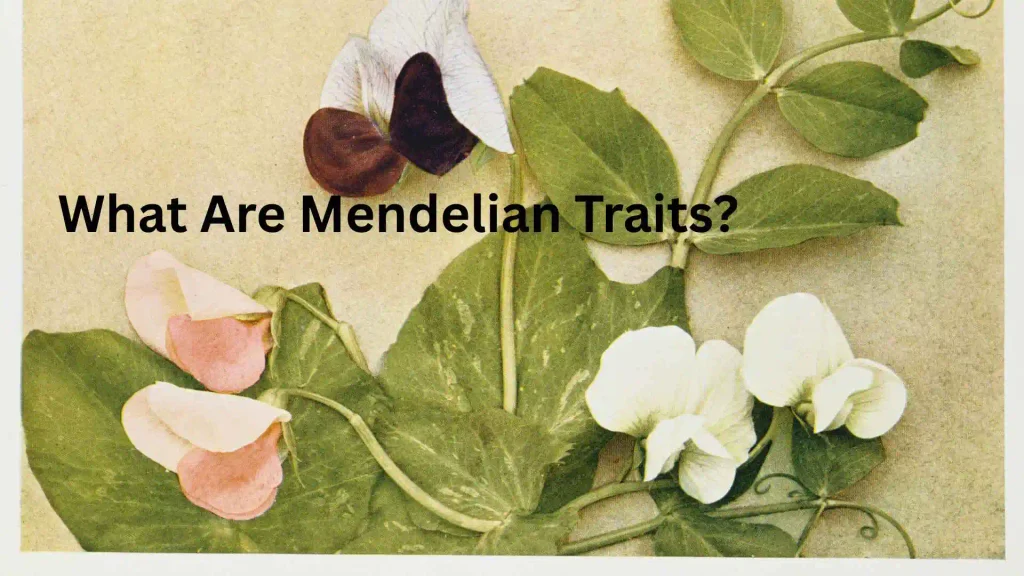
Mendelian traits are characteristics inherited through a simple genetic pattern where one gene mainly determines the outcome. These traits follow the inheritance rules first explained by Gregor Mendel in the 1800s.
Genes are sections of DNA that provide instructions for biological functions. Each gene can have different versions called alleles. An offspring receives one allele from each parent, creating a genetic combination that influences the resulting trait.
For example, if a gene has:
- A dominant allele (A)
- A recessive allele (a)
The possible genetic combinations are:
- AA
- Aa
- aa
The combination determines whether the dominant or recessive trait appears.
The History of Mendelian Genetics
Gregor Mendel and the Discovery of Heredity
Gregor Mendel was an Austrian monk and scientist who studied inheritance patterns using pea plants between 1856 and 1863. His experiments changed scientific understanding of how traits are passed between generations.
Mendel selected pea plants because they had clear characteristics that were easy to observe, including:
- Seed color
- Seed shape
- Flower color
- Plant height
- Pod characteristics
By crossing plants with different traits and recording thousands of results, Mendel discovered predictable patterns of inheritance.
Why Mendel’s Work Changed Biology
Before Mendel’s research, many scientists believed parents blended their characteristics together in offspring. Mendel showed that inherited traits are passed through separate units.
These units were later identified as genes.
His discoveries became the foundation of modern genetics and influenced fields such as:
- Medicine
- Agriculture
- Evolutionary biology
- Biotechnology
How Mendelian Inheritance Works
Genes and Alleles
A gene is a segment of DNA that contains instructions for producing proteins or controlling biological processes.
Alleles are different versions of the same gene.
For example:
A gene may influence flower color, while different alleles may produce:
- Purple flowers
- White flowers
The combination of alleles inherited from parents determines the genetic outcome.
Genotype and Phenotype
Genotype refers to the genetic makeup of an organism.
Examples:
- AA
- Aa
- aa
Phenotype refers to the observable characteristics produced by the genotype.
Examples:
- Eye color
- Flower color
- Certain inherited conditions
A phenotype may also be influenced by environmental factors.
Laws of Mendelian Inheritance
Law of Segregation
The Law of Segregation states that allele pairs separate during the formation of reproductive cells.
Each parent passes only one allele for a particular gene to their child.
Example:
A parent with Aa can provide:
- A allele
- a allele
Law of Independent Assortment
This law explains that genes for different traits can be inherited independently when they are located on separate chromosomes.
Principle of Dominance
The principle of dominance explains why one allele may determine the visible trait when two different alleles are present.
For example:
Aa may show the dominant trait because A masks the effect of a.
Types of Mendelian Traits
Dominant Mendelian Traits
Dominant traits appear when an individual inherits at least one dominant allele.
A dominant allele is usually represented with a capital letter.
Example:
- AA = dominant trait
- Aa = dominant trait
Only one copy of the dominant allele is needed for the trait to appear.
Examples of Dominant Traits
Examples of dominant inheritance include:
- Huntington disease
- Marfan syndrome
- Achondroplasia
In these conditions, inheriting one altered copy of a gene may be enough for the condition to occur.
Recessive Mendelian Traits
Recessive traits require two copies of a recessive allele.
A person with only one recessive allele is usually called a carrier.
Carriers may not show the trait but can pass the allele to their children.
Examples of Recessive Traits
Examples include:
- Cystic fibrosis
- Phenylketonuria (PKU)
- Tay-Sachs disease
Recessive Inheritance Example
When two carriers have children:
Aa × Aa
Possible outcomes:
| Genotype | Result |
| AA | Unaffected |
| Aa | Carrier |
| Aa | Carrier |
| aa | Recessive condition appears |
Homozygous and Heterozygous Conditions
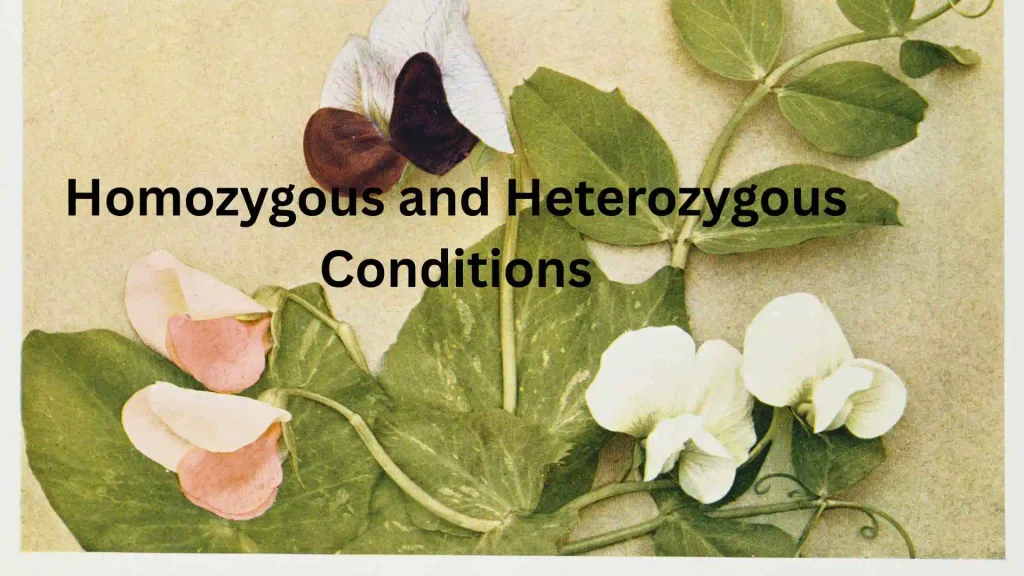
Homozygous Traits
Homozygous means an individual has two identical alleles.
Examples:
- AA
- aa
A person receives the same allele version from both parents.
Heterozygous Traits
Heterozygous means an individual has two different alleles.
Example:
Aa
In many dominant inheritance patterns, the dominant allele determines the phenotype.
Examples of Mendelian Traits in Humans
Cystic Fibrosis
Cystic fibrosis is a genetic disorder caused by changes in the CFTR gene. It follows an autosomal recessive inheritance pattern.
A child usually needs two altered copies of the gene to develop the condition.
Huntington Disease
Huntington disease follows an autosomal dominant inheritance pattern.
A person who inherits one altered copy of the HTT gene may develop the condition.
Phenylketonuria (PKU)
PKU is a recessive inherited condition affecting how the body processes phenylalanine.
Early detection through newborn screening allows treatment options that help manage the condition.
Marfan Syndrome
Marfan syndrome is usually inherited through a dominant pattern and affects connective tissue.
Mendelian Traits in Plants
Mendel’s original experiments focused on pea plant traits.
| Trait | Dominant Form | Recessive Form |
| Seed Shape | Round | Wrinkled |
| Seed Color | Yellow | Green |
| Flower Color | Purple | White |
| Plant Height | Tall | Short |
These experiments helped scientists understand how traits move through generations.
Mendelian Traits vs Non-Mendelian Traits
| Feature | Mendelian Traits | Non-Mendelian Traits |
| Gene Number | Usually one gene | Multiple genes |
| Pattern | Simple inheritance | Complex inheritance |
| Prediction | Easier | More difficult |
| Example | Cystic fibrosis | Human height |
| Environmental Effect | Often smaller | Often larger |
Non-Mendelian Inheritance Patterns
Incomplete Dominance
Incomplete dominance occurs when neither allele completely dominates.
Example:
Red flower + White flower = Pink flower
The offspring shows a blended appearance.
Codominance
Codominance occurs when both alleles are fully expressed.
Example:
AB blood type
Both A and B alleles appear together.
Multiple Alleles
Some genes have more than two allele forms.
Example:
The ABO blood group system includes:
- A allele
- B allele
- O allele
Importance of Mendelian Traits in Modern Science
Role in Medicine
Mendelian genetics helps healthcare professionals:
- Identify inherited disorders
- Understand family health history
- Predict genetic risks
- Provide genetic counseling
Role in Agriculture
Scientists use Mendelian principles to:
- Develop improved crops
- Select useful traits
- Study plant diseases
Role in Scientific Research
Researchers use Mendelian genetics to study:
- Gene function
- Evolution
- Biological diversity
- Genetic mutations
Real Life Examples of Mendelian Inheritance
Family Health History
Doctors may examine family patterns to determine whether a condition follows a dominant or recessive inheritance pattern.
Genetic Counseling
Families use genetic counseling to understand possible inheritance risks.
Medical Testing
DNA tests can identify specific gene changes linked to inherited conditions.
Plant Breeding
Scientists cross plants to produce desired characteristics.
Animal Breeding
Breeders study inherited traits such as coat color and genetic diseases.
Blood Group Inheritance
The ABO blood group system demonstrates how genes influence inherited characteristics.
Laboratory Research
Fruit flies and mice are commonly used to study genetic inheritance.
Personalized Medicine
Genetic information helps researchers understand individual differences.
Evolution Studies
Scientists analyze inherited traits to study changes in populations.
Conservation Biology
Genetics helps protect species by maintaining genetic diversity.
Common Misconceptions About Mendelian Traits
Dominant Does Not Mean Superior
A dominant allele is not necessarily better or healthier. It only describes how inheritance works.
Not All Traits Follow Mendel’s Rules
Many characteristics are influenced by multiple genes.
Examples:
- Height
- Skin color
- Intelligence
Recessive Does Not Always Mean Rare
A recessive allele can be common in certain populations.
Genes Do Not Work Alone
Environmental factors can influence how traits appear.
Frequently Asked Questions
What are Mendelian traits in simple terms?
Mendelian traits are characteristics controlled mainly by one gene and inherited through predictable patterns.
Who discovered Mendelian traits?
Gregor Mendel discovered the basic inheritance principles through pea plant experiments.
Are all human traits Mendelian?
No. Many human traits involve multiple genes and environmental influences.
What is the difference between genotype and phenotype?
Genotype describes genetic information, while phenotype describes observable characteristics.
Can recessive traits skip generations?
Yes. Recessive traits can remain hidden in carriers and appear in later generations.
Why are Mendelian traits important?
They help scientists understand heredity, genetic diseases, agriculture, and biological research.
Key Takeaways
- Mendelian traits follow predictable inheritance patterns.
- Gregor Mendel established the foundation of genetics.
- Dominant traits require one dominant allele.
- Recessive traits usually require two recessive alleles.
- Genotype refers to genetic makeup.
- Phenotype refers to observable characteristics.
- Modern genetics includes many traits beyond simple Mendelian inheritance.
Conclusion
Mendelian traits are one of the most important concepts in genetics because they explain the basic rules of inheritance. The discoveries of Gregor Mendel revealed how genes and alleles are passed from parents to offspring through predictable patterns.
Although many traits are more complex than simple Mendelian inheritance, these principles remain essential in medicine, agriculture, research, and our understanding of biological diversity.

I’m Alistair Pembroke, a British author interested in the enduring patterns that define human character. My work explores personality traits, behavioural tendencies, emotional qualities, and social characteristics. I translate complex ideas into clear insights, helping readers examine how traits develop, interact, and influence the ways individuals perceive themselves and others.
Books:
- The Psychology of Human Traits
- Patterns of Character and Personality
 Fairchild Edmund Fairchild