

Poseidon, the ancient Greek god of the sea, earthquakes, storms, and horses, is one of the most recognizable figures in Greek mythology.
When people search for Poseidon physical traits, they usually want to understand what this powerful deity looked like, how ancient artists portrayed him, and what his appearance symbolized.
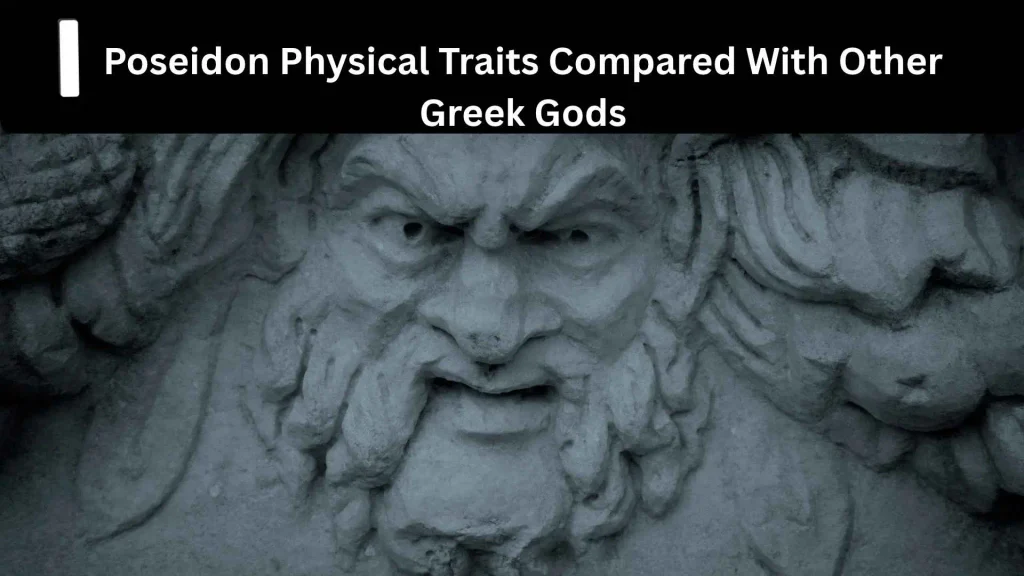
Poseidon is commonly described as a strong, mature man with a muscular body, long flowing hair, a thick beard, and a commanding presence. His physical features reflect his role as a mighty Olympian god whose power controlled the unpredictable forces of nature.
This guide explores Poseidon’s appearance, symbolic features, artistic representations, personality connections, and how his physical traits reveal deeper meanings in Greek mythology.
Poseidon Physical Traits: (Quick Answer)
Poseidon’s physical traits include a powerful muscular build, long flowing hair, a thick beard, intense eyes, and a commanding presence. Ancient Greek art often showed him holding a trident, wearing sea-related symbols, and appearing as a mature warrior-like figure. His appearance represented strength, authority, control over the oceans, and the unpredictable power of nature.
Trait Overview Table
| Physical Trait | Description | Symbolic Meaning |
| Tall, powerful body | Strong and muscular appearance | Strength and divine power |
| Long hair | Flowing hair resembling waves | Connection to the ocean |
| Thick beard | Mature, wise appearance | Authority and experience |
| Trident | Three-pronged weapon | Control over seas and storms |
| Intense eyes | Fierce and commanding gaze | Power and dominance |
| Broad shoulders | Warrior-like physique | Strength and protection |
| Sea imagery | Waves, dolphins, shells, horses | Connection to nature |
| Mature appearance | Often shown as an older god | Wisdom and leadership |
Who Is Poseidon in Greek Mythology?
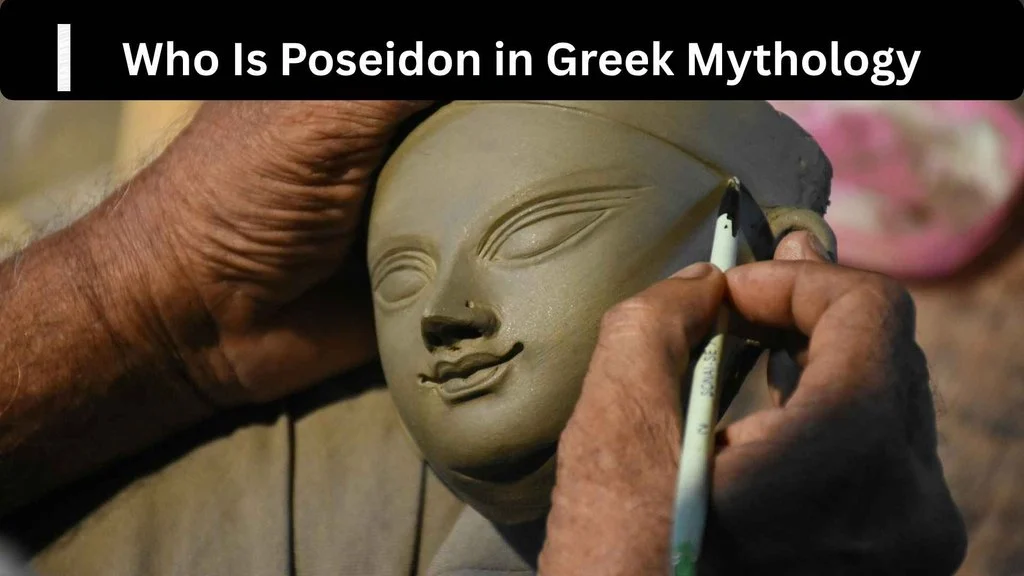
Poseidon is one of the twelve Olympian gods in ancient Greek mythology and the brother of Zeus and Hades. After the Titans were defeated, the three brothers divided control over the universe.
- Zeus became ruler of the sky.
- Hades ruled the underworld.
- Poseidon received dominion over the seas.
As the god of oceans, Poseidon controlled storms, earthquakes, and sea creatures. Ancient Greeks respected and feared him because the sea could provide life through fishing and trade but could also destroy ships and coastal communities.
His physical appearance was designed to represent this dual nature: powerful yet unpredictable, protective yet dangerous.
The Meaning Behind Poseidon’s Physical Appearance
Poseidon’s appearance was not created randomly. Each feature represented an aspect of his divine identity.
A Powerful and Muscular Body
Poseidon is usually portrayed as a large, athletic, and muscular figure. Unlike some gods who are represented with youthful beauty, Poseidon often appears as a mature warrior.
His strong body symbolizes:
- Physical dominance
- Control over natural forces
- Military strength
- Authority among gods
Artists used his powerful physique to show that he was not simply a ruler of the sea but a force of nature himself.
Long Flowing Hair Like Ocean Waves
One of Poseidon’s most recognizable features is his long, flowing hair.
Ancient artists often styled his hair and beard to resemble waves moving through the ocean. This created a visual connection between the god and his underwater kingdom.
His hair represents:
- The movement of waves
- Freedom and wild energy
- The endless nature of the sea
The flowing appearance also separates him from other Olympian gods and makes him instantly recognizable.
Thick Beard and Mature Face
Poseidon is commonly shown with a thick beard and mature facial features.
The beard represents:
- Wisdom
- Masculinity
- Authority
- Experience
Greek artists often used beards to show status and maturity among male gods. Poseidon’s beard helped communicate that he was an ancient and powerful deity.
Intense and Commanding Eyes
Many artistic depictions show Poseidon with a serious or intense expression.
His eyes often communicate:
- Anger
- Determination
- Strength
- Divine authority
Because Poseidon controlled storms and earthquakes, his expression often reflected the dangerous side of the ocean.
Broad Shoulders and Warrior-Like Build
Poseidon’s broad shoulders and strong frame connect him with Greek ideals of heroic masculinity.
His body suggests:
- A warrior’s strength
- Ability to fight monsters
- Protection of his domain
- Leadership among gods
This appearance helped ancient audiences understand his role as a powerful protector and ruler.
Poseidon’s Most Famous Physical Symbols
Poseidon’s appearance is strongly connected with several objects and creatures that represent his powers.
The Trident
The trident is Poseidon’s most famous symbol.
It is a three-pronged spear associated with:
- Control over the ocean
- Creation of storms
- Earthquakes
- Divine authority
In myths, Poseidon used his trident to create earthquakes, split rocks, and influence the seas.
The weapon also shows his status as a ruler because ancient kings and warriors often carried symbolic weapons.
Horses and Horse Imagery
Although Poseidon is mainly known as the god of the sea, he also had a strong connection with horses.
Ancient Greeks called him Poseidon Hippios, meaning Poseidon of Horses.
The horse symbolism represents:
- Speed
- Power
- Wild energy
- Freedom
This connection makes Poseidon unique because he represents both the ocean’s movement and the strength of horses.
Sea Creatures and Ocean Symbols
Poseidon is frequently shown with:
- Dolphins
- Fish
- Sea monsters
- Waves
- Shells
These symbols reinforce his role as ruler of marine life.
Dolphins especially were associated with protection, intelligence, and guidance for sailors.
How Artists Traditionally Portrayed Poseidon
Ancient Greek artists represented Poseidon in sculptures, pottery, and reliefs.
Some famous artistic traditions show him:
- Standing with a trident
- Raising his weapon during battle
- Riding a sea chariot
- Surrounded by ocean creatures
- Appearing as a powerful bearded man
Unlike gods such as Apollo, who were often portrayed as youthful and idealized, Poseidon was usually shown with a more mature and commanding appearance.
Poseidon Physical Traits Compared With Other Greek Gods
| God | Physical Appearance | Main Symbolism |
| Poseidon | Mature, muscular, bearded | Ocean power and authority |
| Zeus | Strong, bearded, regal | Sky and kingship |
| Apollo | Youthful, handsome, athletic | Beauty, music, prophecy |
| Ares | Strong warrior body | War and aggression |
| Hermes | Young, fast, athletic | Travel and communication |
Poseidon and Zeus share similar traits because both represent leadership and masculine power. However, Poseidon’s appearance is more connected to nature’s wild and unpredictable side.
Poseidon’s Personality Reflected Through His Appearance
Physical traits in mythology often reveal personality traits. Poseidon’s appearance matches his legendary character.
Positive Traits Associated With Poseidon
Poseidon’s appearance suggests:
- Strength
- Courage
- Leadership
- Protection
- Determination
He was considered a powerful protector of sailors when respected and honored.
Negative Traits Associated With Poseidon
His appearance also reflects his more dangerous qualities:
- Anger
- Pride
- Revenge
- Unpredictability
Ancient myths often describe Poseidon becoming furious when insulted or challenged.
Neutral Traits Connected to His Character
Some traits represent balance rather than good or bad:
- Independence
- Emotional intensity
- Strong will
- Desire for recognition
Poseidon represents the ocean itself: calm at times and destructive at others.
Real Life Examples of Poseidon’s Traits in Modern Context
Although Poseidon is a mythological figure, his characteristics can be understood through modern examples.
Leadership Example
A strong leader with Poseidon-like traits may appear confident, decisive, and capable of handling pressure.
Sports Example
An athlete with Poseidon’s symbolic qualities might demonstrate:
- Physical strength
- Competitive spirit
- Mental toughness
Workplace Example
A manager who takes control during a crisis may reflect Poseidon’s leadership symbolism.
Creative Example
Artists often use Poseidon’s image to represent powerful emotions and natural forces.
Literature Example
Writers may portray characters with Poseidon-like qualities as powerful figures connected to nature or authority.
Environmental Example
Ocean researchers and conservationists sometimes use Poseidon symbolism to represent respect for marine environments.
Common Misconceptions About Poseidon’s Appearance
Myth: Poseidon Always Had a Blue Appearance
Fact: Ancient Greek artwork did not usually show Poseidon with blue skin. Modern movies and illustrations often use blue colors to emphasize his connection with water.
Myth: Poseidon Looked Like a Mermaid-Like Creature
Fact: Greek mythology generally portrays Poseidon as a human-shaped god rather than a sea creature.
Myth: Poseidon Was Only a Sea God
Fact: Poseidon was also connected with earthquakes and horses.
Myth: All Ancient Artists Showed Poseidon the Same Way
Fact: His appearance changed depending on the artist, region, and historical period.
Poseidon vs Modern Pop Culture Versions
Modern entertainment often changes Poseidon’s appearance to make him more dramatic.
| Traditional Greek Depiction | Modern Pop Culture Depiction |
| Bearded mature man | Sometimes younger character |
| Human form | Occasionally fantasy-inspired designs |
| Trident as main symbol | Enhanced magical weapons |
| Sea authority | Expanded superhero-like powers |
Modern versions usually keep the core traits: strength, ocean connection, and divine authority.
Related Mythological Traits Connected to Poseidon
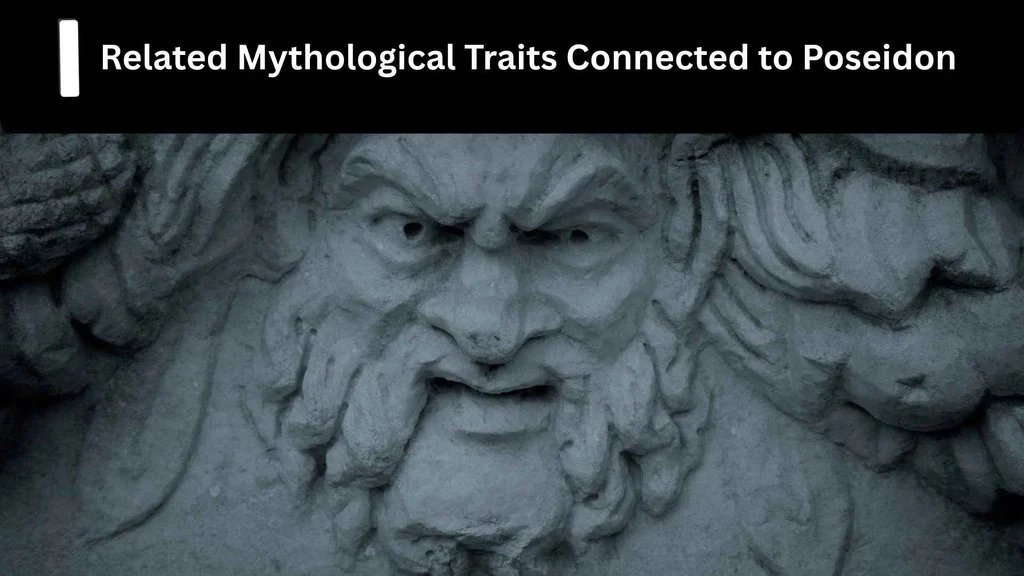
Poseidon’s physical traits connect with several broader mythological concepts.
Divine Strength
Greek gods often displayed physical perfection because their bodies represented supernatural abilities.
Nature Personification
Poseidon represents the ocean’s personality:
- Powerful
- Unpredictable
- Necessary
- Dangerous
Warrior Characteristics
His muscular build and weapon reflect ancient Greek ideas about heroic strength.
Leadership Traits
As ruler of the seas, Poseidon represents authority and control.
Frequently Asked Questions
What are Poseidon’s main physical traits?
Poseidon is usually shown as a muscular, mature man with long hair, a thick beard, strong shoulders, and a powerful presence. He is often shown holding a trident.
What does Poseidon look like in Greek mythology?
Poseidon appears as a powerful bearded god with a warrior-like body. Ancient artwork often connects him with waves, sea creatures, and his famous trident.
Why does Poseidon have a beard?
The beard symbolizes maturity, wisdom, masculinity, and authority in ancient Greek artistic traditions.
What does Poseidon’s trident represent?
The trident represents his control over the seas, storms, earthquakes, and his position as ruler of ocean forces.
Was Poseidon physically stronger than Zeus?
Greek myths do not clearly rank their physical strength. Zeus and Poseidon were both extremely powerful Olympian gods with different areas of authority.
Why is Poseidon associated with horses?
Poseidon was believed to have created or influenced horses and was worshiped as Poseidon Hippios, the god connected with horses.
Key Takeaways
- Poseidon is traditionally portrayed as a powerful, mature, bearded Greek god.
- His muscular body represents strength and divine authority.
- His flowing hair connects him with ocean waves.
- The trident symbolizes control over seas and storms.
- His horse and sea symbolism show his connection with nature.
- His appearance reflects both protection and destruction.
- Modern portrayals often adapt his image while keeping his traditional symbols.
Conclusion
Poseidon’s physical traits reveal much more than his appearance. His muscular build, flowing hair, beard, intense expression, and legendary trident represent the enormous power and mystery of the ocean. Ancient Greeks viewed him as a god who could bring calm seas or devastating storms, and his appearance reflected that balance.
Understanding Poseidon’s physical characteristics helps explain how mythology used visual symbols to communicate power, personality, and natural forces. From ancient sculptures to modern stories, Poseidon remains one of the most recognizable figures representing strength, authority, and the untamed power of nature.

I’m Sebastian Langford, a British writer specialising in the study of human traits, personality, and behaviour. I examine how individual characteristics influence decisions, relationships, communication, and personal development. Through accessible research and thoughtful analysis, I aim to help readers understand the subtle qualities that shape identity, character, and everyday human interaction.
Books:
- The Architecture of Human Traits
- Character, Personality and Behaviour
 Alistair Pembroke