
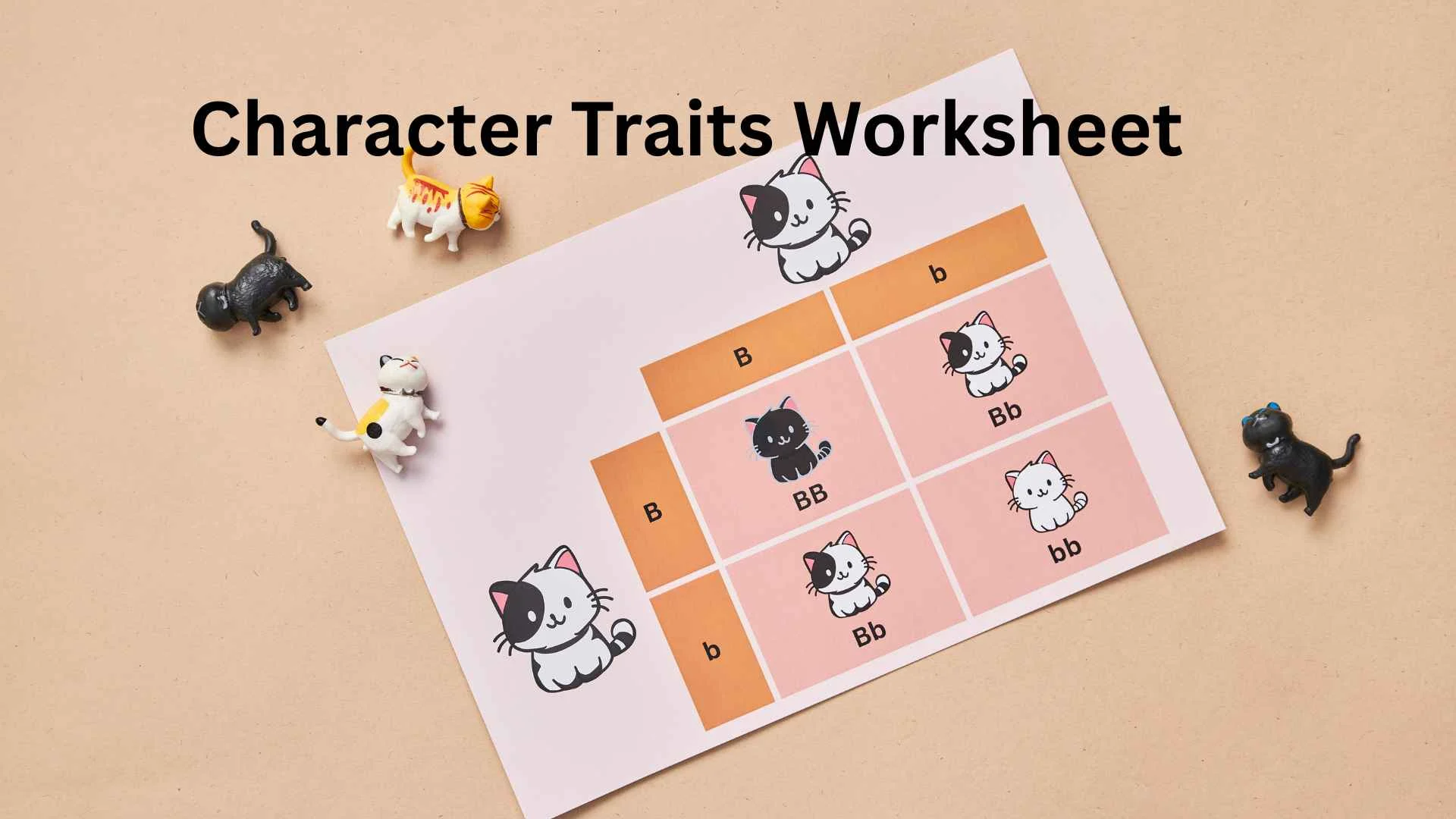
A character traits worksheet helps students understand and identify the qualities, behaviors, and personalities of people or fictional characters.
Instead of only describing what a character looks like, these worksheets teach learners how to recognize deeper qualities such as honesty, courage, kindness, responsibility, creativity, and determination.
Character traits are revealed through actions, words, thoughts, choices, and reactions to different situations. A well-designed worksheet allows students to practice reading comprehension, expand their vocabulary, improve writing skills, and develop critical thinking.
Whether used in elementary classrooms, middle school literature lessons, or advanced character analysis activities, character traits worksheets make it easier to understand why characters behave the way they do.
This guide explains what a character traits worksheet is, why it matters, how to use it, different worksheet activities, examples, common mistakes, and practical strategies for teachers, parents, and students.
Character Traits Worksheet: (Quick Answer)
A character traits worksheet is an educational activity that helps students identify and explain the qualities that describe a character’s personality, behavior, and values. It usually includes trait vocabulary, character analysis questions, evidence-based activities, and writing exercises that teach students how to support their answers with examples from a story.
Character Traits Worksheet Overview
A character traits worksheet is designed to help learners move beyond simple descriptions and understand the deeper personality of a character.
For example:
A student reads that a character helps an injured animal. Instead of writing only:
“ The character is nice.”
A worksheet encourages a stronger answer:
Trait: Compassionate
Evidence: The character cared for an injured animal and took time to help.
This teaches students that character traits are connected to actions and choices.
| Worksheet Element | Purpose |
| Trait vocabulary | Helps students learn descriptive words |
| Character evidence | Teaches proof-based thinking |
| Analysis questions | Builds comprehension skills |
| Writing activities | Improves explanation abilities |
| Reflection exercises | Encourages self-awareness |
What Are Character Traits?
Character traits are the qualities, habits, attitudes, and behaviors that describe how a person or fictional character usually thinks and acts.
Traits can describe:
- Moral values
- Emotional responses
- Social behavior
- Decision-making patterns
- Personal strengths
- Personal weaknesses
Examples of character traits include:
- Honest
- Brave
- Loyal
- Creative
- Patient
- Selfish
- Curious
- Responsible
- Generous
- Determined
Character traits are different from temporary emotions. Feeling angry for five minutes is an emotion, but being impatient as a repeated behavior can be a character trait.
Why Character Traits Worksheets Are Important
They Improve Reading Comprehension
Character traits worksheets help students understand stories at a deeper level.
Instead of asking only:
“What happened?”
Students learn to ask:
- Why did the character make that choice?
- What does this action reveal?
- How does the character change?
This creates stronger readers who can analyze meaning instead of only remembering events.
They Build Vocabulary Skills
Many students use simple words when describing characters.
Basic description:
- Good
- Bad
- Nice
- Mean
Advanced description:
- Compassionate
- Responsible
- Ambitious
- Self-centered
- Courageous
A worksheet introduces better vocabulary that improves both reading and writing.
They Develop Critical Thinking
Character analysis requires students to connect evidence with conclusions.
Example:
Evidence:
“The character returned a lost wallet.”
Reasoning:
Returning something valuable shows honesty.
Trait:
Honest
This process teaches logical thinking.
Types of Character Traits Worksheets
Different worksheets focus on different learning goals.
Positive Character Traits Worksheets
Positive trait worksheets teach students about admirable qualities and behaviors.
Common positive traits include:
| Trait | Meaning | Example |
| Honest | Tells the truth | Admits a mistake |
| Kind | Cares about others | Helps a friend |
| Brave | Faces challenges | Tries despite fear |
| Responsible | Can be trusted | Completes duties |
| Patient | Waits calmly | Handles delays well |
| Creative | Develops new ideas | Finds solutions |
These activities are especially useful for younger students learning social skills.
Negative Character Traits Worksheets
Negative traits help students understand flaws, conflicts, and character growth.
Examples:
| Trait | Meaning | Example |
| Selfish | Thinks only about themselves | Refuses to share |
| Lazy | Avoids effort | Does not complete work |
| Dishonest | Does not tell the truth | Lies to escape blame |
| Arrogant | Has excessive pride | Treats others poorly |
| Impatient | Struggles to wait | Gets frustrated quickly |
Negative traits do not always mean a character is completely bad. Many stories use flaws to create realistic characters.
Character Trait Sorting Worksheets
Sorting activities help students organize vocabulary.
Example categories:
Positive Traits
- Helpful
- Loyal
- Friendly
Negative Traits
- Rude
- Careless
- Jealous
Neutral Traits
- Quiet
- Serious
- Independent
This activity helps students understand that traits can have different effects depending on situations.
How to Identify Character Traits From a Story
Analyze the Character’s Actions
Actions often reveal the strongest clues about personality.
Example:
A character shares food with someone who has none.
Possible traits:
- Generous
- Caring
- Thoughtful
Study the Character’s Words
Dialogue shows beliefs, attitudes, and values.
Example:
“I will continue practicing until I improve.”
Possible traits:
- Determined
- Hardworking
- Persistent
Look at Character Decisions
Choices reveal priorities.
Example:
A character admits breaking a rule even though punishment may happen.
Possible traits:
- Honest
- Responsible
- Courageous
Observe Character Changes
Many characters develop throughout a story.
Example:
Beginning:
The character avoids helping others.
Ending:
The character protects a friend.
Character growth:
Selfish → Caring
Character Traits Worksheet Activities
Trait Matching Activity
Students match traits with meanings.
Example:
Brave → Faces fear
Generous → Gives to others
Patient → Waits calmly
This improves vocabulary recognition.
Evidence and Explanation Activity
Students identify a trait and explain why.
Example:
Character:
Maria
Trait:
Responsible
Evidence:
Maria completes her homework and helps organize class materials.
Explanation:
Her actions show that others can depend on her.
Character Trait Chart Activity
Students complete a chart:
| Character | Trait | Evidence |
| Alex | Brave | Helps during an emergency |
| Sarah | Honest | Admits her mistake |
| Tom | Creative | Finds a new solution |
Character Comparison Activity
Students compare two characters.
Example:
Character A:
- Brave
- Helpful
- Patient
Character B:
- Fearful
- Selfish
- Impatient
This helps students understand different personalities.
Character Traits vs Personality Traits
| Character Traits | Personality Traits |
| Focus on values and behavior | Focus on general personality patterns |
| Often shown through choices | Often shown through temperament |
| Used heavily in literature analysis | Used in everyday descriptions |
| Example: Honest | Example: Outgoing |
A person can have both types.
Example:
Someone may be quiet (personality trait) but extremely loyal (character trait).
Internal Traits vs External Traits
| Internal Traits | External Traits |
| Related to thoughts and values | Related to visible actions |
| Courage | Helping others |
| Honesty | Keeping promises |
| Creativity | Building something new |
Internal traits explain what happens inside a character, while external traits show how those qualities appear through behavior.
Real Life Character Trait Examples
School Example
Situation:
A student helps a classmate understand difficult homework.
Trait:
Helpful
Evidence:
The student spends extra time explaining the lesson.
Workplace Example
Situation:
An employee accepts responsibility for a mistake.
Trait:
Accountable
Evidence:
They admit the error and work on a solution.
Leadership Example
Situation:
A team leader listens to everyone before making decisions.
Trait:
Fair and respectful
Evidence:
They value different opinions.
Family Example
Situation:
A child helps with household tasks without being reminded.
Trait:
Responsible
Evidence:
They recognize responsibilities independently.
Sports Example
Situation:
An athlete continues training after losing.
Trait:
Determined
Evidence:
They keep working toward improvement.
Common Mistakes When Using Character Traits Worksheets
Confusing Appearance With Traits
Incorrect:
“The character wears expensive clothes, so they are successful.”
Appearance does not always show personality.
Choosing Traits Without Evidence
A student should explain why a trait fits.
Weak answer:
“The character is brave.”
Strong answer:
“The character is brave because they entered the dangerous area to rescue someone.”
Using Only Simple Words
Words like “good” and “bad” are too general.
Better choices:
- Kind
- Courageous
- Reliable
- Thoughtful
- Dishonest
How Teachers Can Create Better Character Traits Worksheets
Use Realistic Situations
Students understand traits better when examples feel real.
Good examples include:
- Classroom situations
- Family situations
- Workplace examples
- Story characters
Encourage Explanation
A strong worksheet should ask:
- What trait describes this character?
- What evidence proves it?
- How does this trait affect the story?
Match Difficulty With Age
Younger students:
- Happy
- Kind
- Brave
Older students:
- Resilient
- Manipulative
- Compassionate
- Ambitious
Character Traits Worksheet Decision Guide
Use this simple method:
What does the character do?
↓
Helps others
→ Kind / Caring / Generous
↓
Faces challenges
→ Brave / Courageous
↓
Keeps trying
→ Determined / Persistent
↓
Avoids responsibility
→ Careless / Lazy
↓
Learns from mistakes
→ Mature / Responsible
Common Misconceptions About Character Traits
Characters Have Only One Trait
Fact:
Characters usually have multiple traits.
A person can be:
- Funny
- Serious
- Brave
- Nervous
at different times.
Negative Traits Mean a Character Is Bad
Fact:
Flaws make characters realistic. Many stories are about characters improving themselves.
Traits Never Change
Fact:
Some traits can develop through experiences and learning.
Related Character Analysis Concepts
Character Development
Character development explains how a character changes during a story.
Character Motivation
Motivation explains why a character behaves in a certain way.
Character Conflict
Conflict reveals personality by showing how characters respond to problems.
Character Strengths and Weaknesses
Strengths show positive qualities, while weaknesses reveal challenges.
Frequently Asked Questions
What is the purpose of a character traits worksheet?
A character traits worksheet teaches students how to identify personality qualities and support their ideas with evidence from stories or real-life situations.
What are examples of character traits?
Common examples include:
- Honest
- Brave
- Kind
- Creative
- Loyal
- Responsible
- Patient
- Determined
How do students find character traits?
Students identify traits by examining actions, dialogue, thoughts, choices, relationships, and reactions to challenges.
Are character traits and personality traits the same?
They are related but different. Character traits often describe values and behavior, while personality traits describe general patterns of thinking and interaction.
Can a character have negative traits?
Yes. Negative traits often make characters more realistic and help create interesting stories.
Why should students use evidence when identifying traits?
Evidence helps students explain their thinking and prevents random guesses about a character’s personality.
Key Takeaways
- A character traits worksheet helps students analyze personalities and behaviors.
- Traits are discovered through actions, words, thoughts, and choices.
- Evidence-based answers create stronger character analysis.
- Worksheets improve vocabulary, reading skills, and critical thinking.
- Characters can have positive, negative, and changing traits.
- Character analysis skills are useful in school, writing, and everyday life.
Conclusion
A character traits worksheet is more than a simple classroom activity. It is a powerful tool that teaches students how to understand personalities, analyze behavior, and support ideas with evidence. By learning how traits influence actions and decisions, students become stronger readers, writers, and critical thinkers.
The most effective worksheets combine vocabulary practice, character analysis, real-life examples, and reflection activities. Whether used by teachers, parents, or students, these resources help develop a deeper understanding of people and the choices they make.

I’m Edmund Fairchild, a British writer devoted to exploring the qualities that distinguish one personality from another. I examine character traits through psychological, social, and behavioural perspectives, presenting ideas in an engaging and accessible manner. My purpose is to encourage deeper reflection on personality, individuality, temperament, and human behaviour.
Books:
- The Dimensions of Human Character
- An Introduction to Personality Traits
 Alistair Pembroke